Back to How-to
Sustainability is crucial across all industries, although its definition varies. Broadly speaking, it is about meeting current needs without compromising health and safety, while considering future generations, balancing the environment, society and economy.
Although less obvious than energy or water consumption, or the use of plastics and paper, cleaning and maintenance chemicals play an important role in environmental sustainability and the health and safety of occupants.
While commonly used hazardous cleaning chemicals pose significant risks, despite their effectiveness and low cost, improper disposal can pollute soil, water and air, damaging ecosystems. In addition, human health is at stake, as exposure to hazardous chemicals can lead to respiratory problems, skin irritations and even carcinogenic effects.
Choosing safer alternatives to hazardous chemicals is essential to protecting the environment, preserving biodiversity and promoting human health.
EPA's Safer Choice program: Helping businesses make better decisions.
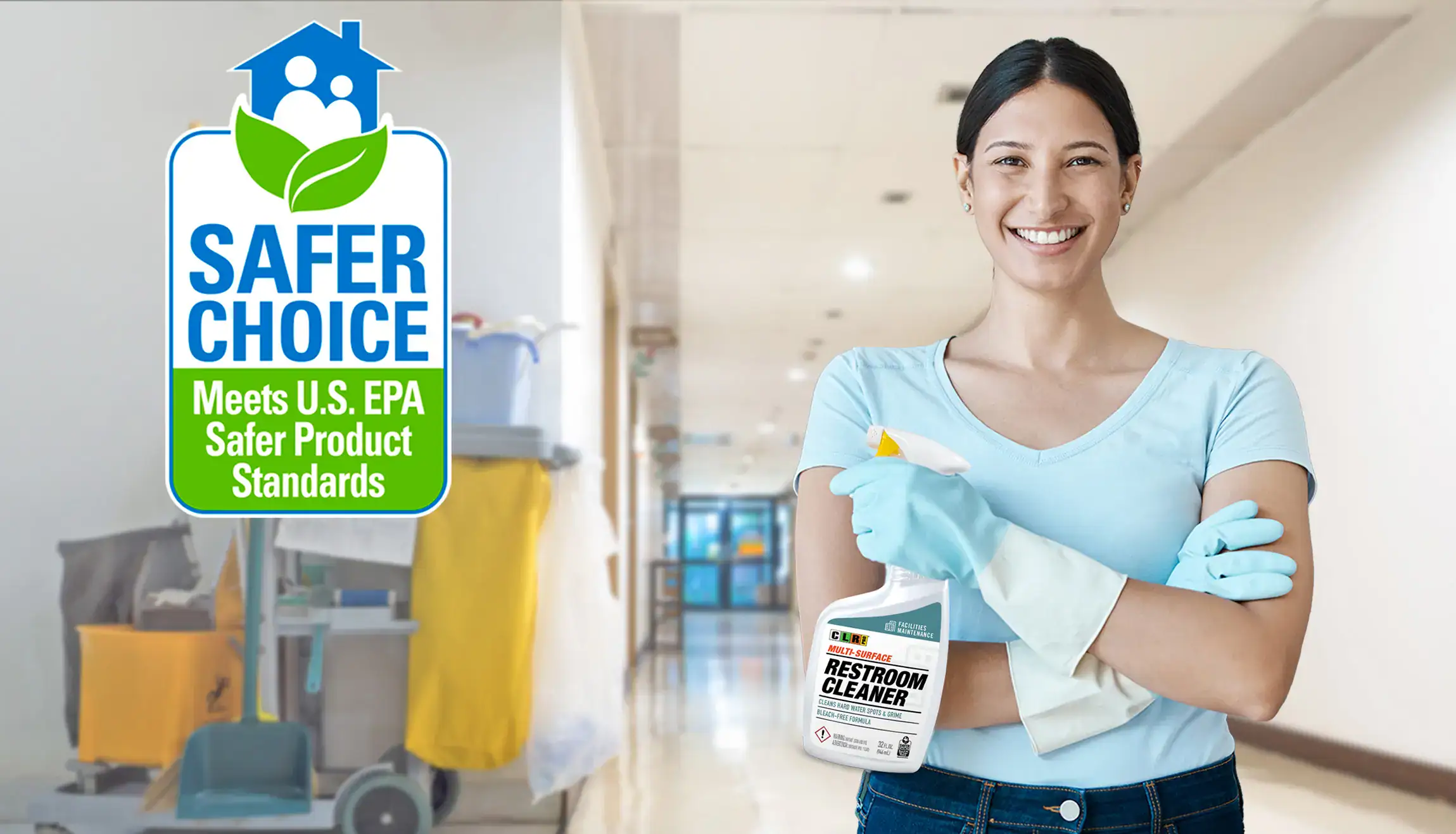
An important initiative that promotes sustainability in cleaning is the EPA's Safer Choice program, a voluntary initiative of the U.S. Environmental Protection Agency (EPA). The program evaluates the chemical ingredients in cleaning products and emphasizes safer alternatives that are both effective and sustainable. By awarding the Safer Choice label, the EPA identifies products that meet its rigorous standards for safety and environmental impact.
Using Safer Choice products strengthens sustainability efforts, reduces environmental impact and promotes healthier workplaces.
Companies that use Safer Choice labeled cleaning products not only enhance their reputation for environmental responsibility, but may also qualify for LEED (Leadership in Energy and Environmental Design) points through the U.S. Green Building Council (USGBC), further incentivizing their adoption and supporting their sustainability credentials.